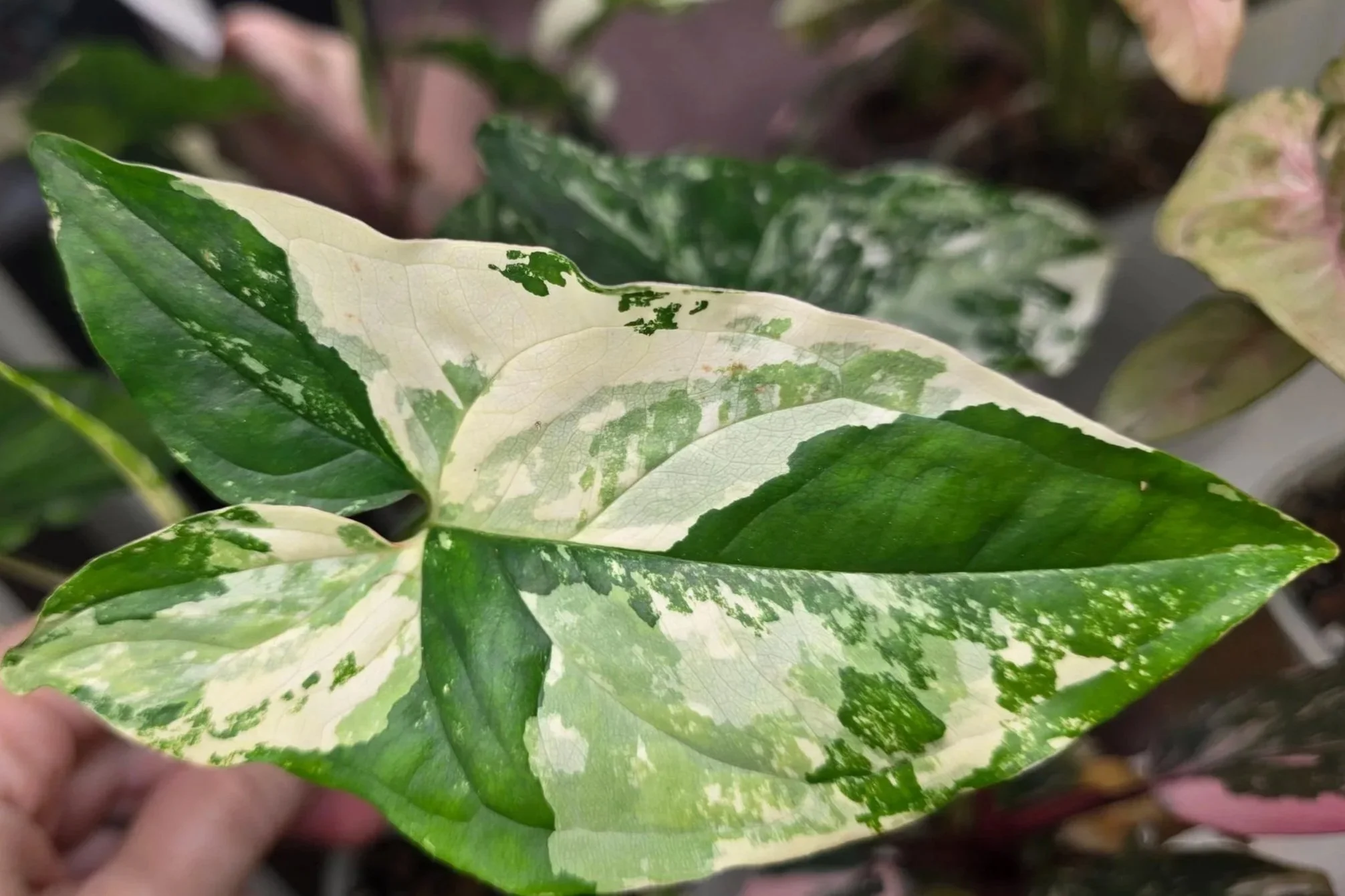
Syngonium Care Guide
Overview
Syngoniums, also known as arrowhead plants, are versatile tropical plants loved for their changing leaf shapes and wide range of colors—from soft greens to striking pinks and variegation. They can grow as compact bushy plants or mature into climbing vines, making them ideal for both beginners and collectors.
Care At a Glance
Care Code: 2–3 / 2–3 / M–H
(Light / Water / Humidity)
Light
Syngoniums prefer bright, indirect light, but adapt well to moderate conditions.
2 (Medium Light): Maintains growth, though may become leggier
3 (Bright Indirect): Encourages compact growth and vibrant color
Tips:
Variegated and pink varieties need brighter light to maintain color
Too little light → faded color and stretched growth
Avoid harsh direct sun, which can burn delicate leaves
Water
Syngoniums like evenly moist soil but are sensitive to overwatering.
2–3 (Moderate): Let the top 1–2 inches dry before watering
Keep soil lightly moist, not soggy
Watch for:
Yellowing leaves → often overwatering
Drooping or curling → underwatering or dry soil
Pro tip: Syngoniums tend to “tell you” quickly when they need water—watch the leaves.
Humidity
Syngoniums thrive in moderate to high humidity.
M (Moderate): 40–60% works well
H (High): 60%+ encourages larger, more mature leaves
Tips:
Higher humidity promotes faster growth and leaf size changes
Pink and variegated varieties are often more sensitive to dry air
Grouping plants or using a humidifier helps maintain consistency
Growth Habits
Syngoniums are naturally climbing plants, though often grown as compact tabletop plants when young.
Bushy (juvenile): Compact and full
Climbing (mature): Produces larger, more defined leaves
Support tips:
Provide a moss pole or trellis to encourage mature growth
Prune regularly to maintain a fuller, bushier shape if desired
Soil & Potting
Use a light, airy, well-draining mix:
Potting soil or coco coir
Perlite or pumice
Bark (optional for added airflow)
Potting tips:
Repot when roots are crowded or drying out quickly
Choose a pot only slightly larger (1–2 inches)
Avoid overly dense soil mixes—they hold too much moisture
Fertilizing
Syngoniums benefit from regular, light feeding:
Spring & Summer: Every 2–4 weeks
Fall & Winter: Reduce or stop feeding
Use a balanced fertilizer at moderate strength
Signs of hunger: slow growth, smaller leaves, or dull color
⚠️ Common Mistakes (From Experience)
Overwatering in compact soil:
Syngoniums hate sitting in dense, soggy mixes—this is the fastest way to cause root rot.Not pruning regularly:
Without pruning, they quickly become leggy and sparse instead of full and bushy.Keeping them too dark:
They survive in low light, but color fades and growth becomes stretched and weak.Ignoring their climbing nature:
Mature plants want to climb—without support, they stay smaller and less defined.Letting humidity drop too low:
Dry air can cause crispy edges, especially on pink and variegated varieties.Using pots that are too large:
Too much soil = too much retained moisture = higher risk of rot.Inconsistent watering:
Letting them fully dry out repeatedly can stress the plant and stunt growth.
Pro Tips
Prune often to keep plants full and encourage branching
Train up a pole if you want larger, mature leaves
Bright light = better color (especially for pink and variegated types)
Easy to propagate—great for expanding your collection or selling cuttings
🌿 Explore Syngonium Varieties
Click a variety for detailed care instructions:
Syngonium Podophyllum
Syngonium Pink Splash
Syngonium Albo Variegata
Syngonium Neon Robusta
Syngonium Mojito
💚 Final Note
Syngoniums are fast-growing, adaptable, and constantly changing, making them one of the most rewarding plants to grow. With the right balance of light, water, and humidity, they’ll stay full, vibrant, and easy to manage—whether you prefer a compact plant or a climbing statement piece.