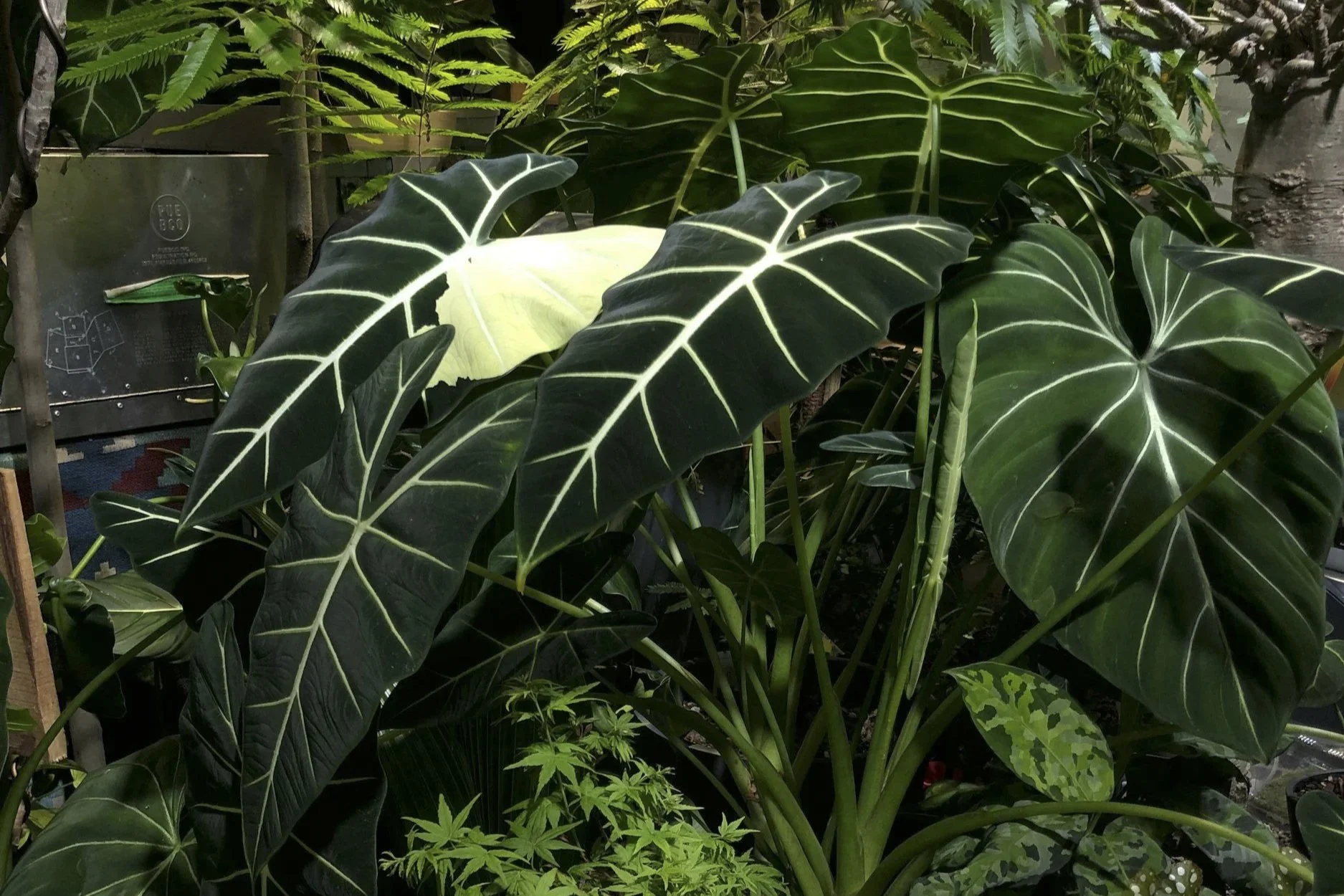
Alocasia Care Guide
Overview
Alocasias are striking tropical plants known for their bold, architectural leaves and dramatic contrast—from deep green velvety textures to silvery, high-contrast veins. While incredibly rewarding, they can be more sensitive than other houseplants and require a balanced environment to truly thrive.
Care At a Glance
Care Code: 3 / 2–3 / H ⚠
(Light / Water / Humidity)
⚠ = More sensitive / collector-level care
Light
Alocasias need bright, indirect light to thrive.
3 (Bright Indirect): Essential for strong growth and healthy leaves
Can tolerate brief gentle morning sun, but avoid harsh direct exposure
Tips:
Too little light → drooping, smaller leaves, slower growth
Variegated types require even brighter conditions
Stable lighting is key—Alocasias react quickly to changes
Water
Alocasias prefer consistent moisture with good drainage.
2–3 (Moderate): Keep soil lightly moist; allow the top inch to dry slightly
Never let the soil stay soggy
Watch for:
Overwatering → yellowing, mushy stems, root rot
Underwatering → drooping, crispy edges
Pro tip:
They are sensitive to watering inconsistencies—aim for a steady rhythm rather than extremes.
Humidity
Humidity is critical for healthy Alocasia growth.
H (High): 60–80%+ preferred
Tips:
Low humidity → crispy edges, stalled or deformed growth
Thrive in cabinets, greenhouses, or rooms with humidifiers
Pair high humidity with airflow to prevent fungal issues
Growth Habits
Alocasias grow from a central corm and produce leaves individually rather than vining.
Typically maintain a set number of leaves at a time
Older leaves may die off as new ones emerge (normal behavior)
Growth tips:
Don’t panic when a leaf drops during new growth
Growth may slow or pause in cooler months
Soil & Potting
Alocasias require a chunky, well-draining mix that still retains some moisture.
A balanced mix includes:
Potting soil or coco coir
Bark
Perlite or pumice
Potting tips:
Avoid dense or compacted soil
Repot when roots outgrow the pot or soil breaks down
Choose pots with excellent drainage
Clear pots can help monitor root and corm health
Fertilizing
Alocasias are moderate to heavy feeders during active growth.
Spring & Summer: Every 2–4 weeks
Fall & Winter: Reduce or stop feeding if growth slows
Use a balanced fertilizer at moderate strength
Signs of hunger: smaller leaves, pale color, slowed growth
⚠ Avoid over-fertilizing—can lead to root burn or stress.
⚠️ Common Mistakes (From Experience)
Overwatering in dense soil:
This is the fastest way to lose an Alocasia—roots and corms rot quickly without airflow.Letting humidity drop too low:
Crispy edges and stalled growth are almost always humidity-related.Panicking over leaf loss:
It’s normal for Alocasias to drop older leaves as new ones emerge—this isn’t always a problem.Inconsistent care routines:
Sudden changes in watering, light, or environment can trigger stress responses.Ignoring dormancy signs:
In cooler seasons, growth may slow dramatically or pause—this is natural.Using pots that are too large:
Excess soil holds too much moisture and increases rot risk.Poor airflow in high humidity setups:
High humidity without airflow can lead to fungal or bacterial issues.
Pro Tips
Consistency is everything—stable light, humidity, and watering
Use a chunky mix that balances airflow and moisture
Expect some leaf turnover—focus on overall plant health
Alocasias thrive in controlled environments (cabinets or greenhouses) ⚠
Monitor corm health—this is the core of the plant
🌿 Explore Alocasia Varieties
Click a variety for detailed care instructions:
Alocasia Frydek
Alocasia Polly
Alocasia Dragon Scale
Alocasia Silver Dragon
Alocasia Black Velvet
💚 Final Note
Alocasias are bold, dramatic, and incredibly rewarding when their environment is right. While they can be more sensitive than other houseplants, consistent care and proper conditions will result in stunning, statement-worthy growth.