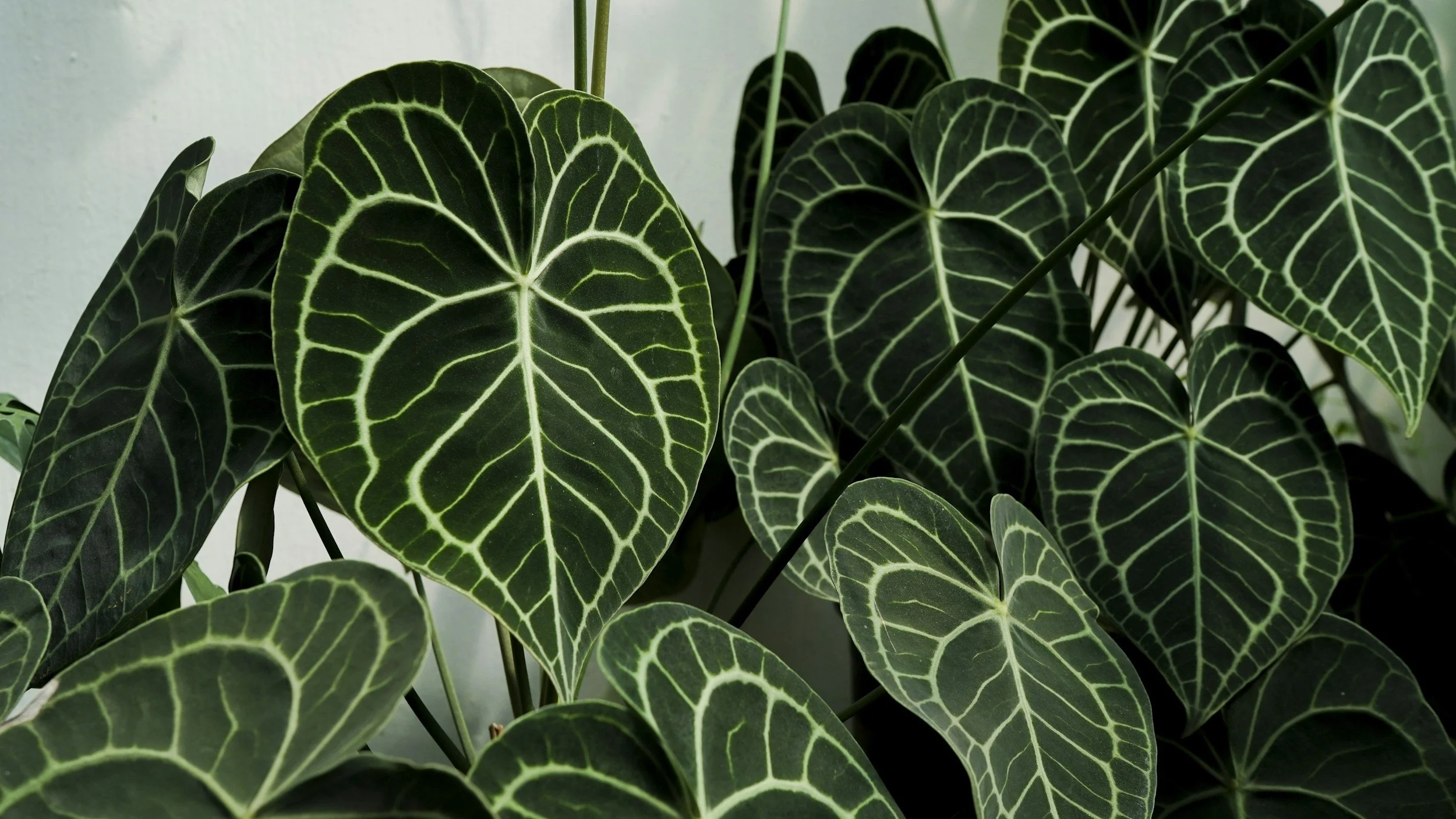
Anthurium Care Guide
Overview
Anthuriums are striking tropical plants known for their bold foliage and unique textures—from glossy, heart-shaped leaves to velvety, high-contrast collectors’ varieties. While some are grown for their flowers, many modern Anthuriums are prized for their dramatic foliage. With the right environment, they can be incredibly rewarding and long-lived.
Care At a Glance
Care Code: 2–3 / 2–3 / H ⚠
(Light / Water / Humidity)
⚠ = More sensitive / collector-level care
Light
Anthuriums thrive in bright, indirect light.
2 (Medium Light): Tolerated, but slower growth
3 (Bright Indirect): Ideal for strong, healthy foliage
Tips:
Avoid direct sun—it can quickly burn leaves, especially velvety types
Velvety Anthuriums need consistent light to maintain contrast and size
Too little light → smaller leaves, leggy growth
Water
Anthuriums prefer consistent moisture with excellent drainage.
2–3 (Moderate): Let the top layer dry slightly, but don’t let the soil fully dry out
Keep soil lightly moist—not wet
Watch for:
Overwatering → root rot, yellowing leaves
Underwatering → drooping, crispy edges
Pro tip: Anthuriums are less forgiving than Philodendrons—consistency is key.
Humidity
Humidity is one of the most important factors for Anthurium success.
H (High): 60–80%+ is ideal
Tips:
Velvety varieties (crystallinum, magnificum, etc.) require higher humidity
Low humidity → crispy edges, stalled growth, leaf damage
Use a cabinet, humidifier, or enclosed space for best results
Stable humidity matters more than occasional spikes
Growth Habits
Most Anthuriums are upright growers with a central stem, though growth varies by type.
Foliage types: Grown for large, textured leaves
Flowering types: Produce long-lasting blooms (spathes)
Growth tips:
New leaves often emerge soft and delicate—avoid handling during this stage
Growth may be slower than other aroids but is more dramatic over time
Soil & Potting
Anthuriums require a chunky, breathable mix to prevent root rot.
A good mix includes:
Orchid bark
Perlite or pumice
Coco coir or sphagnum moss
Potting tips:
Roots need airflow—avoid dense soil
Repot when roots outgrow the pot or mix breaks down
Choose pots with excellent drainage
Clear pots can help monitor root health (great for collectors)
Fertilizing
Anthuriums benefit from light, consistent feeding:
Spring & Summer: Every 2–4 weeks at diluted strength
Fall & Winter: Reduce or stop feeding
Organic options: worm castings, diluted fish emulsion
Signs of hunger: smaller leaves, pale color, slow growth
⚠ Over-fertilizing can burn roots quickly—less is more.
⚠️ Common Mistakes (From Experience)
Using regular potting soil:
Dense soil suffocates roots and leads to rot—chunky mix is non-negotiable.Low humidity environments:
This is the #1 reason velvety Anthuriums fail—dry air causes constant stress.Inconsistent watering:
Letting the plant fully dry out, then soaking it, creates stress and leaf damage.Too much light or direct sun:
Leaves can burn quickly, especially delicate or velvety types.Overhandling new leaves:
New growth is fragile—touching or moving it can cause damage or deformities.Fertilizing too heavily:
Anthuriums are sensitive—strong fertilizer can damage roots quickly.Ignoring airflow:
High humidity without airflow can lead to fungal issues.
Pro Tips
Stable conditions = success (light, humidity, watering)
Velvety Anthuriums thrive in cabinets or controlled environments ⚠
New leaves size up over time—patience pays off
Use clear pots or check roots regularly to avoid hidden rot
Combine high humidity with airflow for best results
🌿 Explore Anthurium Varieties
Click a variety for detailed care instructions:
Anthurium Crystallinum
Anthurium Magnificum
Anthurium Forgetii
Anthurium Clarinervium
Anthurium Warocqueanum
💚 Final Note
Anthuriums are collector favorites for a reason—their foliage is unmatched in texture and beauty. While they require more attention than beginner plants, dialing in humidity, soil, and consistency will reward you with stunning, long-lasting growth.